Simple Haven Projects
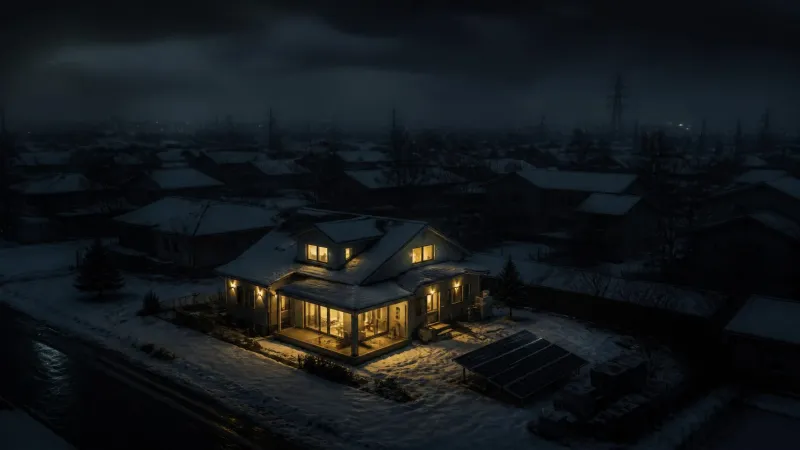
Imagine waking up at 3:00 AM to a chilling, dead silence. Outside, a severe winter storm is howling, or perhaps an unprecedented heatwave has finally pushed the city's aging infrastructure to its breaking point. The hum of the refrigerator has stopped. Your phone displays "No Service." The streetlights are completely dead. For the first 24 hours, you treat it like a minor inconvenience. But by Day 3, the situation evolves from an annoyance into a terrifying crisis.
The food in your deep freezer—hundreds of dollars worth of vital supplies—is beginning to rot. The temperature inside your home is rapidly becoming unlivable. Water treatment plants shut down, cutting off fresh water to your taps. This is exactly what happens when the grid collapses. It is not a hypothetical scenario; it is an increasing reality. According to the U.S. Department of Energy, major blackout events have surged drastically, driven by extreme weather, an overloaded system, and vulnerabilities to cyber-attacks.
Relying completely on a centralized municipal power system is a massive gamble with your family's safety. The only guaranteed way to survive a prolonged infrastructure failure is by proactively transitioning to living off the grid electricity. You must transform your home from a dependent structure into a self-sustaining fortress before the lights go out for good.
When discussing disaster preparedness, the immediate instinct for most people is to rush out and buy a loud, heavy, commercial gas generator. If you are serious about protecting your family during a long-term grid failure, you must understand that this is a rookie mistake that can put your life in danger.
First, gas generators are the exact opposite of stealthy. In a prolonged blackout, desperation sets in quickly among those who did not prepare. A combustible engine screaming at 90 decibels essentially acts as a massive acoustic beacon. It announces to everyone within a mile radius: "I have power, I have food, and I have valuable supplies." In a crisis, remaining unnoticeable is critical for your security.
Second, they are entirely dependent on a fragile supply chain. A gas generator requires fuel. When the grid collapses, the electric pumps at local gas stations immediately stop working. Once the limited supply in your stored jerry cans runs dry, your expensive generator becomes a heavy, useless paperweight.
Furthermore, the Centers for Disease Control and Prevention (CDC) issues constant warnings about the fatal risks of carbon monoxide poisoning from gas generators. Attempting to run them close to your home during a storm has cost countless families their lives.
If the municipal grid is a ticking time bomb, and gas generators are a loud, dangerous trap, how do you actually protect your home? The answer lies in decentralizing your power supply. True energy independence for homeowners means cutting the invisible cord that makes you vulnerable to government failures and utility company incompetence.
Energy independence is not just about keeping the television on; it is about absolute peace of mind. It is the ability to confidently look at your family during a devastating storm and know that they will remain warm, fed, and safe. It means your essential medical equipment will never shut down, your communications gear will stay charged, and your carefully stockpiled food will remain frozen solid.
To achieve this level of security, you need a system that harnesses an infinite, renewable fuel source—the sun. But you do not need to spend $30,000 on flashy, fragile roof panels that advertise your wealth to the neighborhood. You need a solution that is compact, rugged, and entirely under your control.
The most powerful secret in the modern survivalist community is that generating and storing your own electricity is simply basic physics, not advanced rocket science. You can build an incredibly robust, high-capacity diy home battery backup right in your garage, using off-the-shelf components available at any local hardware store or online retailer.
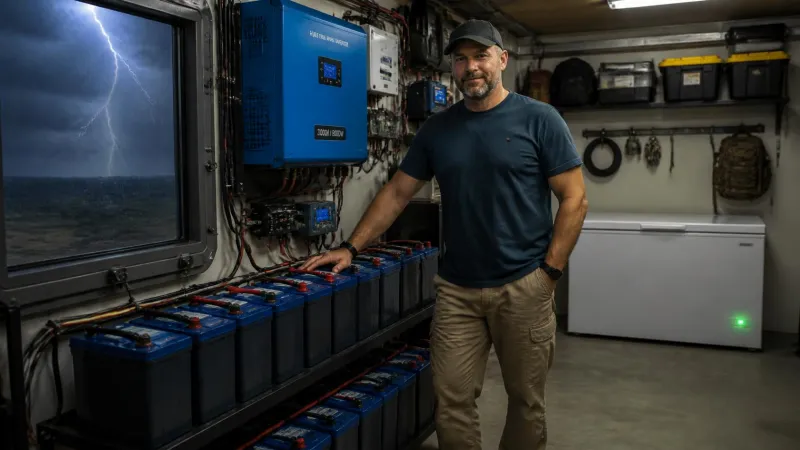
A proper DIY off-grid setup consists of a localized solar collection source (utilizing advanced 3D spatial designs to maximize light absorption), a smart charge controller to regulate the energy, and a heavy-duty deep-cycle battery bank. Because you assemble it yourself, you avoid the predatory pricing of commercial solar companies.
More importantly, building your own system makes you the ultimate master of your domain. If a proprietary commercial Powerwall fails during a crisis, you are helpless. If a component in your DIY battery bank fails, you already possess the intimate knowledge of exactly how it was wired, allowing you to swap parts and restore your power in minutes.
When the dust settles and you objectively compare the options for disaster survival, the facts clearly point to what is genuinely the best home backup power for outages.
1. The Central Grid: Highly convenient in times of peace, but mathematically proven to be fragile and unreliable during severe weather or national emergencies. It offers zero security.
2. Fossil Fuel Generators: Loud, expensive to operate, mechanically complex, and utterly reliant on a fuel supply chain that will not exist during a real crisis. They are a temporary band-aid, not a survival plan.
3. Stealth DIY Solar & Battery Systems: The undisputed champion of long-term survival. They operate in dead silence, produce zero toxic fumes, and refuel themselves endlessly as long as the sun rises. Their compact nature allows them to be hidden securely inside a basement or garage, keeping your energy wealth entirely off the radar.
The absolute worst time to start preparing is when the emergency broadcast system is already sounding and the grocery store shelves are empty. The time to secure your family's future, gather your materials, and build your energy fortress is right now, while supply chains are still functioning and parts are cheap.
If you are intimidated by the thought of working with wires and batteries, you are exactly who the Energy Revolution System was designed for. This is not a confusing textbook; it is a clear, step-by-step blueprint created specifically for average homeowners. It details exactly what parts to buy, where to get them cheaply, and how to safely connect them to create a localized power plant that will outlast any blackout.
Do not wait until you are shivering in the dark, watching your food spoil, wishing you had taken action. Stop gambling with your family's safety and take control of your own survival today.